MakingDataStructuresUnderstandableThroughInterfaces
Howdata,semantics,andsystemdesigndefinewhatuserssee,access,andunderstand.
A data-driven interface is a representation of the underlying data tailored to specific user roles, so that the information presented matches users’ needs and levels of access.
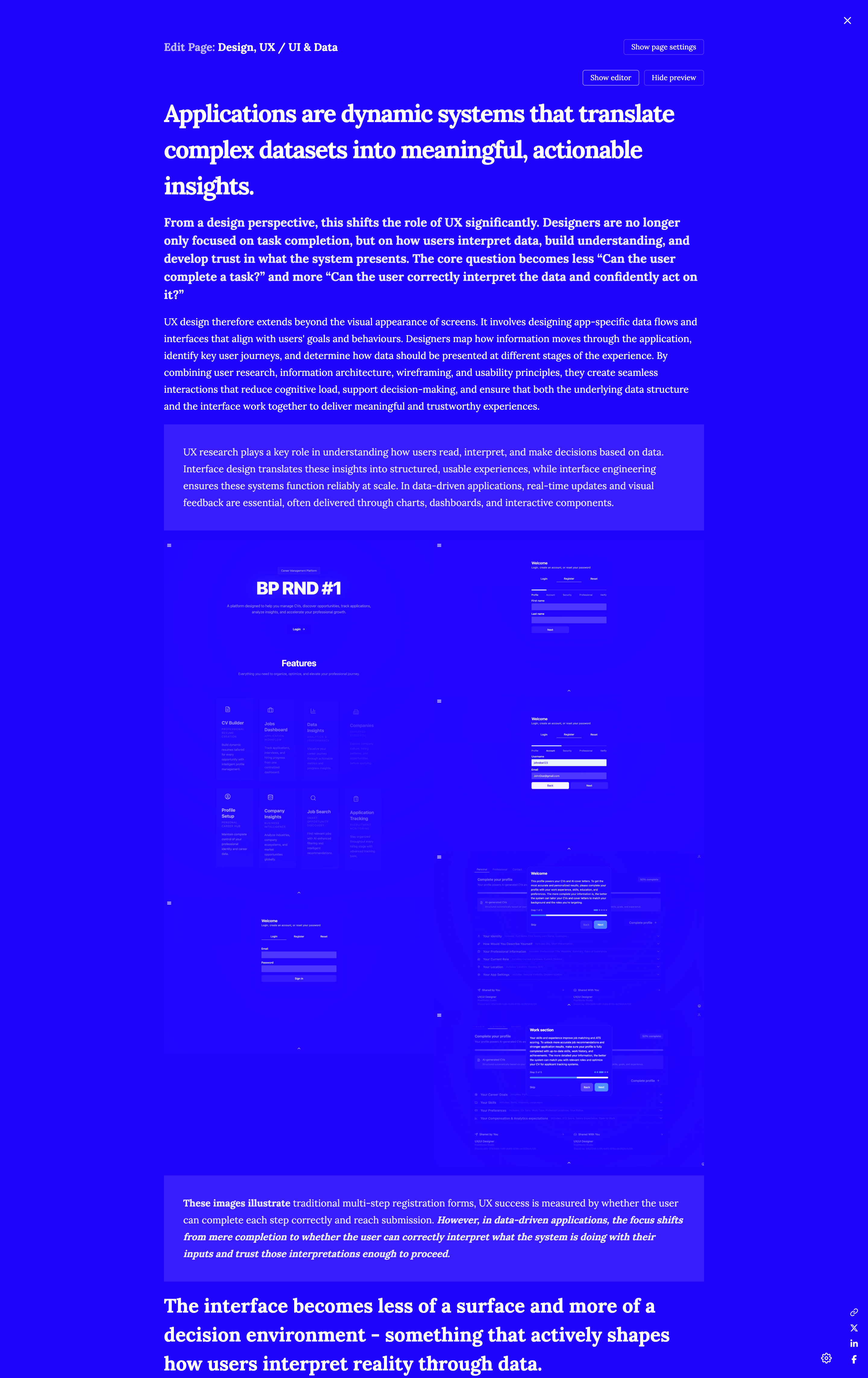
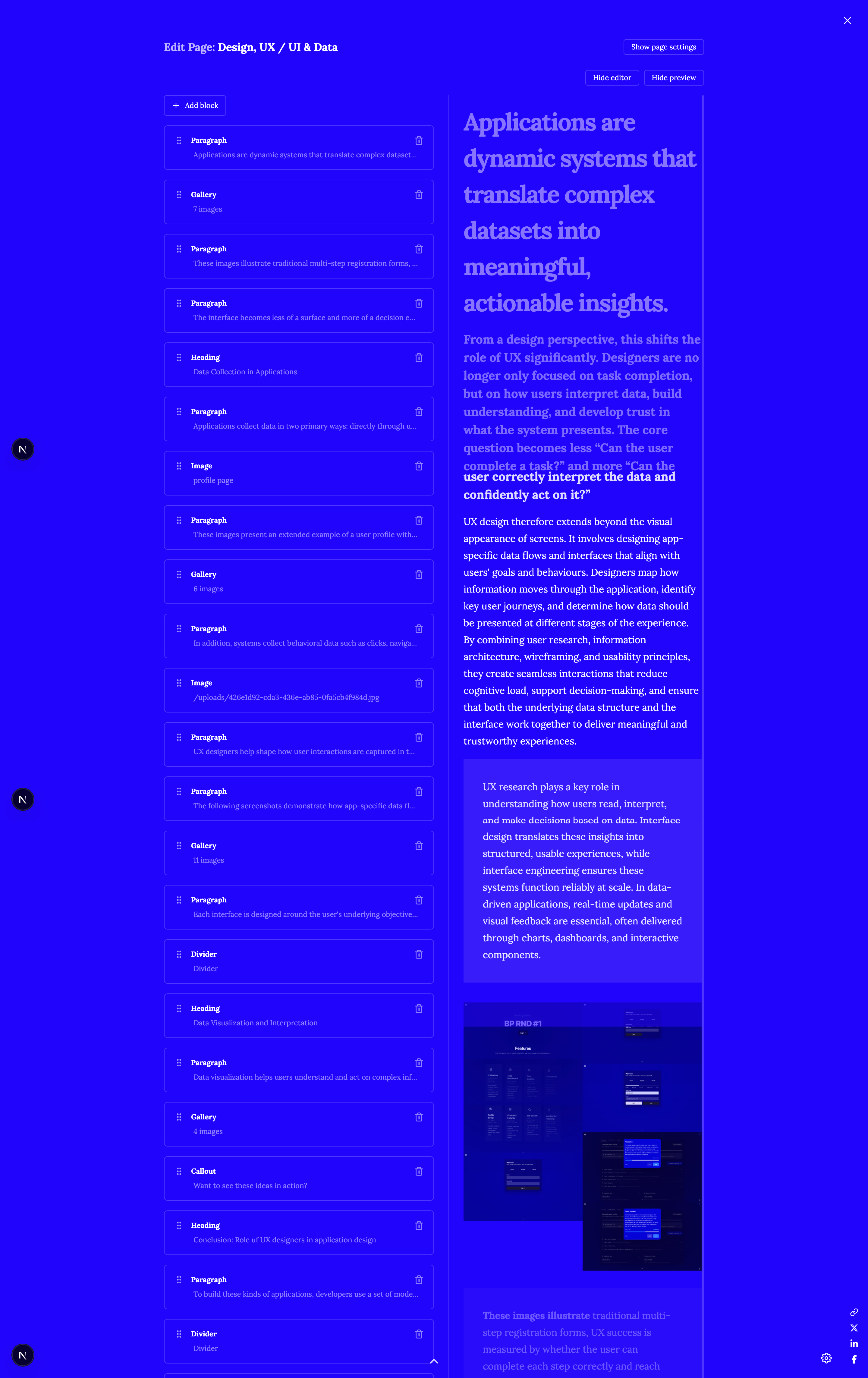
The images above show a basic text page with multiple paragraphs, along with its associated editing sections, which are accessible depending on the user’s access level.
Behind every polished interface lies a rich structure of information that users rarely see - but browsers, search engines and automated systems rely on constantly. For UX designers, understanding this invisible layer is becoming just as important as understanding layout or visual hierarchy.
Think of a modern website as three tightly connected layers: structure, style, and behavior. Those layers correspond to HTML, CSS, and JavaScript.
Building on that, semantic design focuses on how meaning is encoded into those layers rather than just how things look. In well-structured systems, HTML expresses what something is - headings, navigation, articles, forms - while CSS describes how it should appear, and JavaScript defines how it behaves. This separation becomes especially important when distinguishing frontend and backend development.
The frontend is responsible for the user-facing layer: everything the browser renders and the user directly interacts with, including structure interpretation, styling, and client-side behavior.
The backend, by contrast, operates behind the interface, managing data, business logic, authentication, and server-side processing.
Frontend (User-facing layer)
Responsible for everything the user sees and interacts with in the browser. It handles structure interpretation (HTML), styling (CSS), and client-side behavior (JavaScript). The frontend focuses on user experience, layout, responsiveness, and interaction design. It works within the browser environment and presents information supplied by backend systems.
Backend (System & data layer)
Runs behind the scenes on servers and is not directly visible to users. It manages data storage, authentication, and server-side processing. The backend focuses on rules, computations, security, and data integrity. It operates within server and database environments and supplies structured data and rules that power frontend interfaces.
The levels of access are defined through user permissions, which determine what each role is allowed to see, do, or modify within the system. For example, an administrator might have full access to create, edit, and delete records, while a standard user may only view certain data, and a guest may have access to a limited subset of public information. These permissions act as a control layer that filters and shapes the interface dynamically, ensuring that sensitive or irrelevant data is not exposed to unauthorized users.
Semantic design is about making sure meaning survives translation from backend systems to frontend interfaces.
The level permissions are closely tied to semantic design, which is about making sure meaning survives translation from backend systems to frontend interfaces. When data is created in the backend, it usually has a clear structure and intent: for example, a “user” might have attributes like role, permissions, status, and timestamps. But if the frontend only treats this as generic text or loosely structured UI elements, that meaning gets lost. Semantic design prevents that loss by ensuring each piece of data is represented in the interface in a way that reflects its real purpose in the system.
On the frontend, this means choosing UI elements and structure based on what something is, not just how it should look. A warning state should not just be styled in red—it should be marked and treated as a “warning” across the system. A navigation menu is not just a list of links visually arranged at the top; it is a semantic “navigation” region that both users and machines can understand consistently.
This alignment also improves communication between frontend and backend teams. Instead of exchanging raw or ambiguous data, they work with clearly defined concepts—like “order status,” “payment state,” or “user role”—that carry the same meaning across the system. As a result, the frontend becomes a faithful expression of the backend model rather than a disconnected visual layer.
In practice, semantic design leads to interfaces that are more accessible, easier to maintain, and more adaptable, because the structure is driven by meaning rather than purely by appearance.
Semantic Design, Search Engines & AI
Search engines interpret web pages in a fundamentally different way from human users. Instead of “seeing” layouts, colors, or visual hierarchy, they analyze the underlying structure of a document. This includes elements such as document hierarchy, metadata, structured content, internal linking, semantic markup, and relationships between different pages. Each of these signals helps search engines understand what the content is about and how different parts of a site connect to one another. As a result, two pages that look visually identical to a user can perform very differently in search rankings if one is semantically well-structured while the other is not.
This means that design decisions extend beyond visual appearance and directly influence discoverability. The way content is structured in HTML—how headings are organized, how sections are labeled, and how information is grouped—can affect how easily search engines interpret and rank a page, even if the interface itself remains unchanged. In this sense, design is not only about what users see, but also about how machines read and evaluate the page behind the scenes.
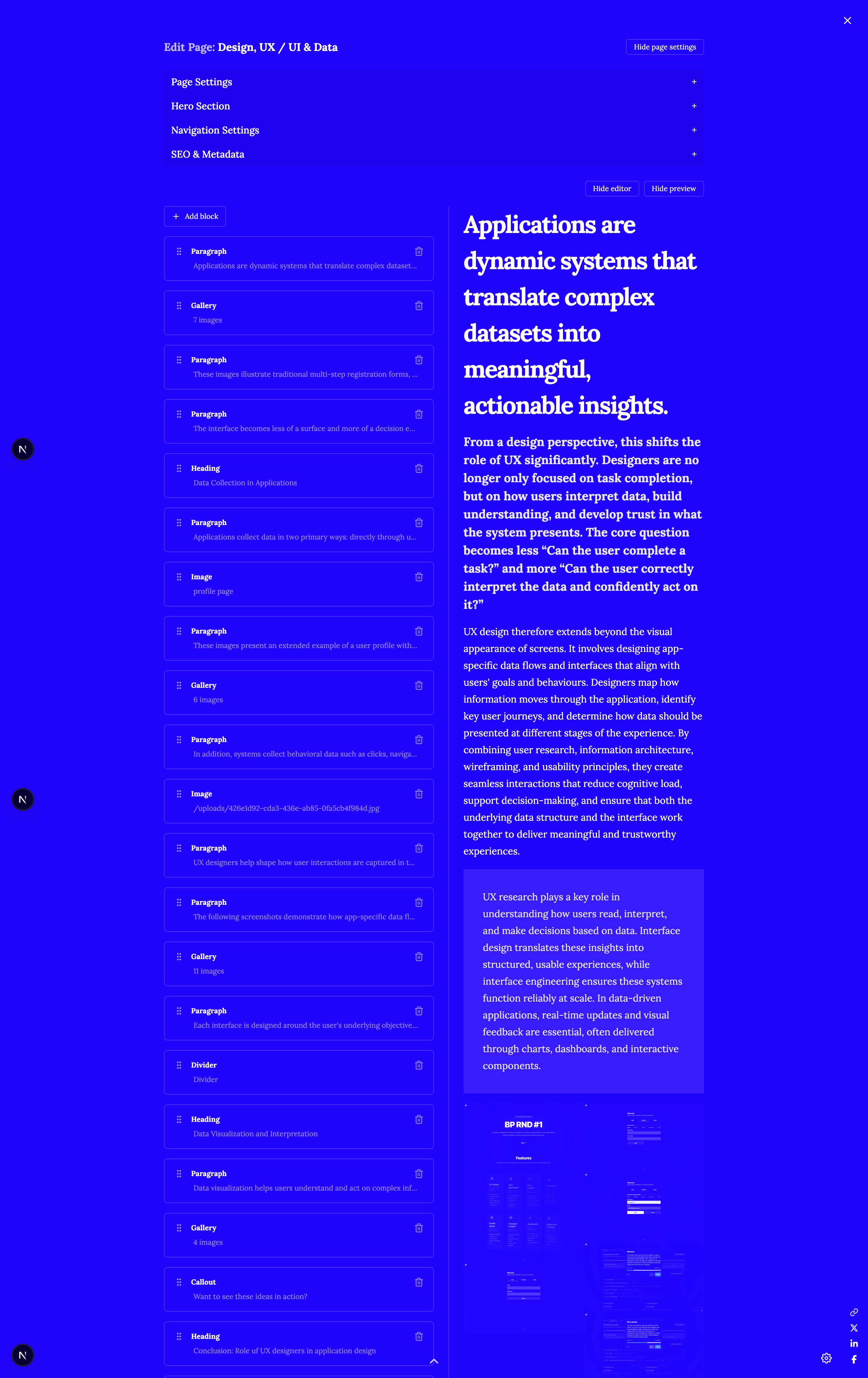
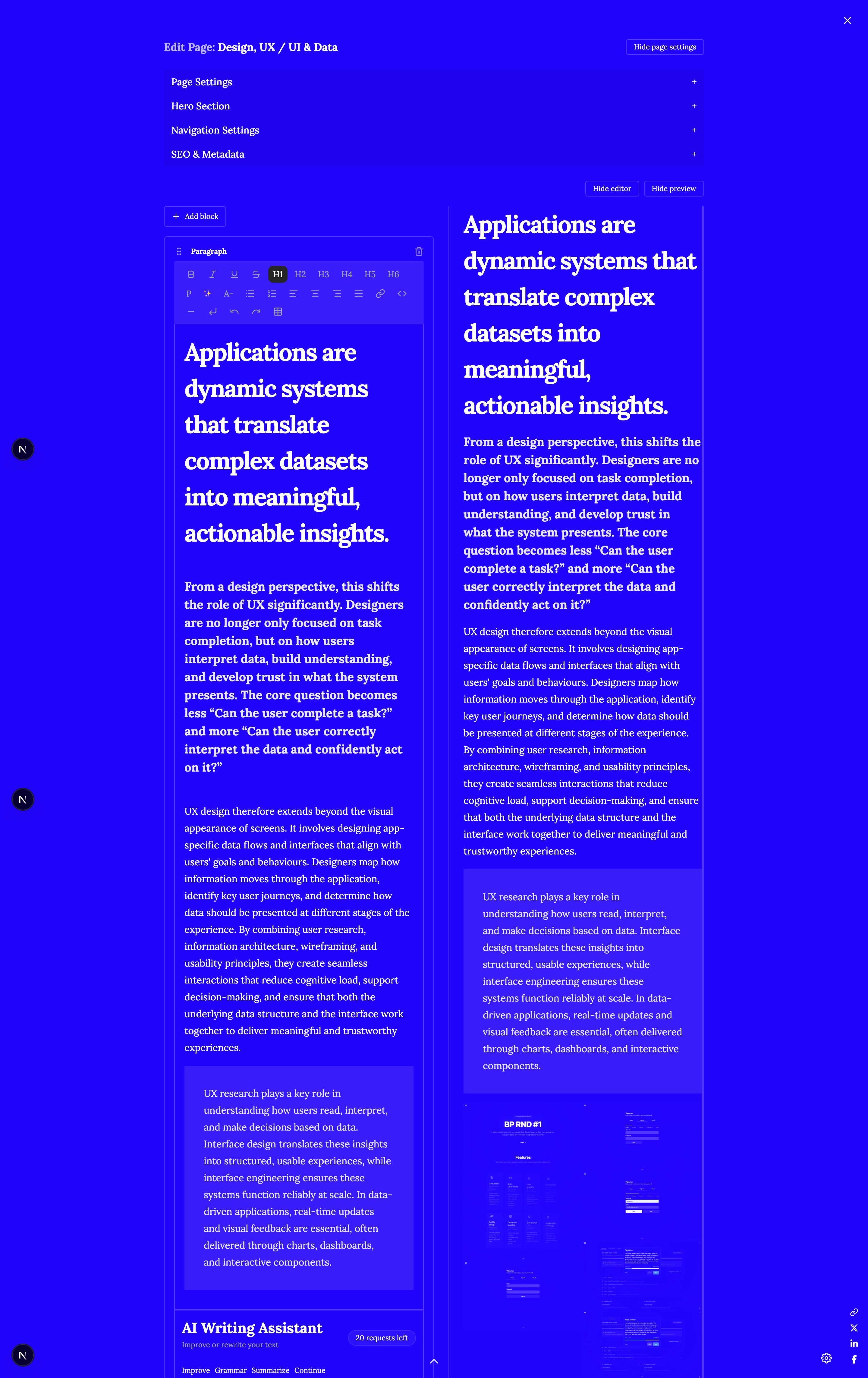
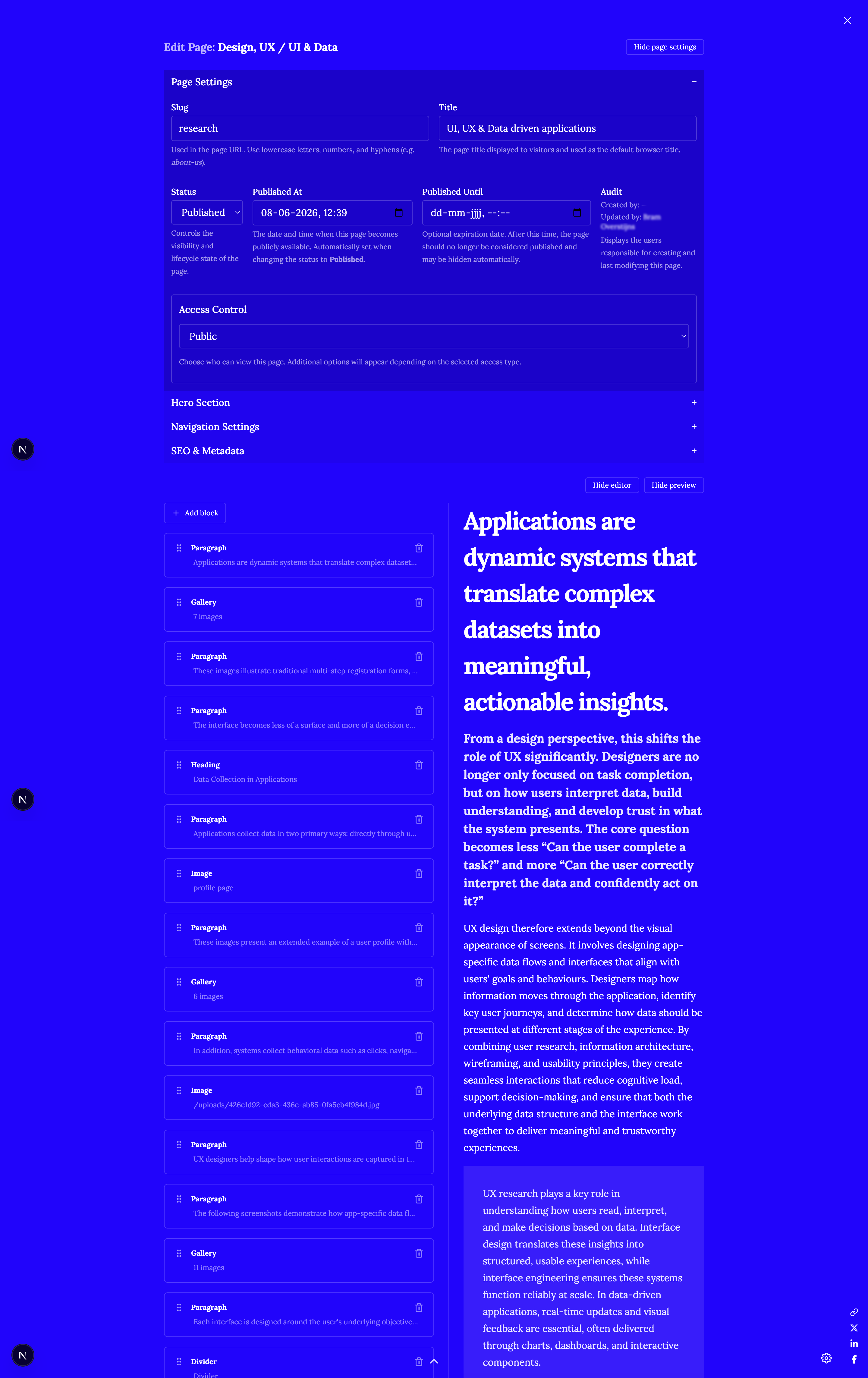
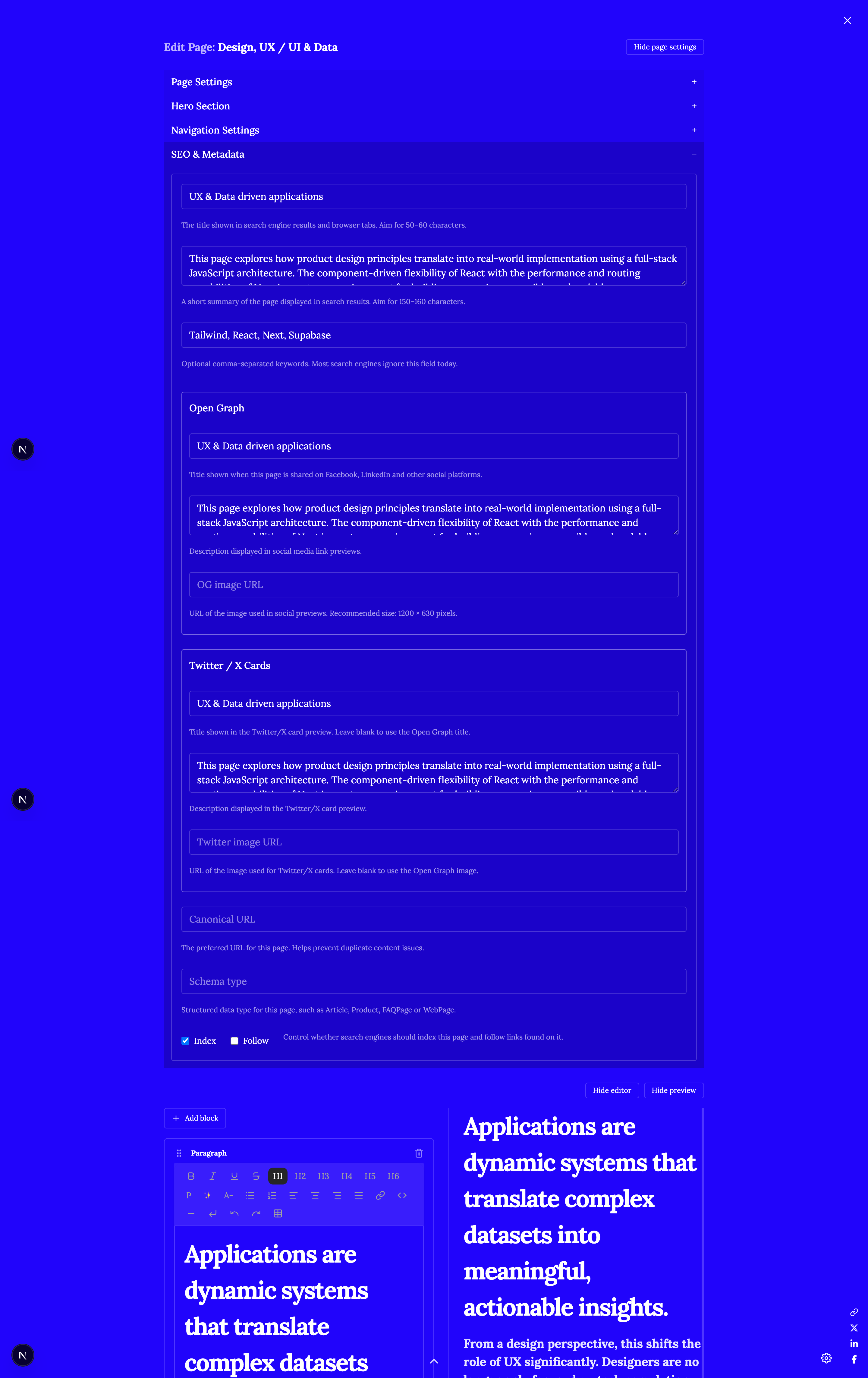
The images show the editing panel for semantic data that is not visible in the frontend, including slug, publishing, and access settings for individual pages, as well as metadata related to SEO.
At the same time, AI-powered systems are making semantic design even more important. As AI assistants increasingly summarize, index, and interact with web content, they rely heavily on the underlying structure of a document rather than its visual presentation. Unlike human users, these systems often consume raw or semi-structured HTML directly to extract meaning, identify key sections, and generate responses.
Well-structured semantic HTML helps AI systems understand page sections more accurately, identify which information is most important, summarize content reliably, extract precise answers, and recommend relevant pages with better context. In this way, the invisible structure of a webpage becomes part of the user experience itself - even when the user never directly visits or visually engages with the website.